
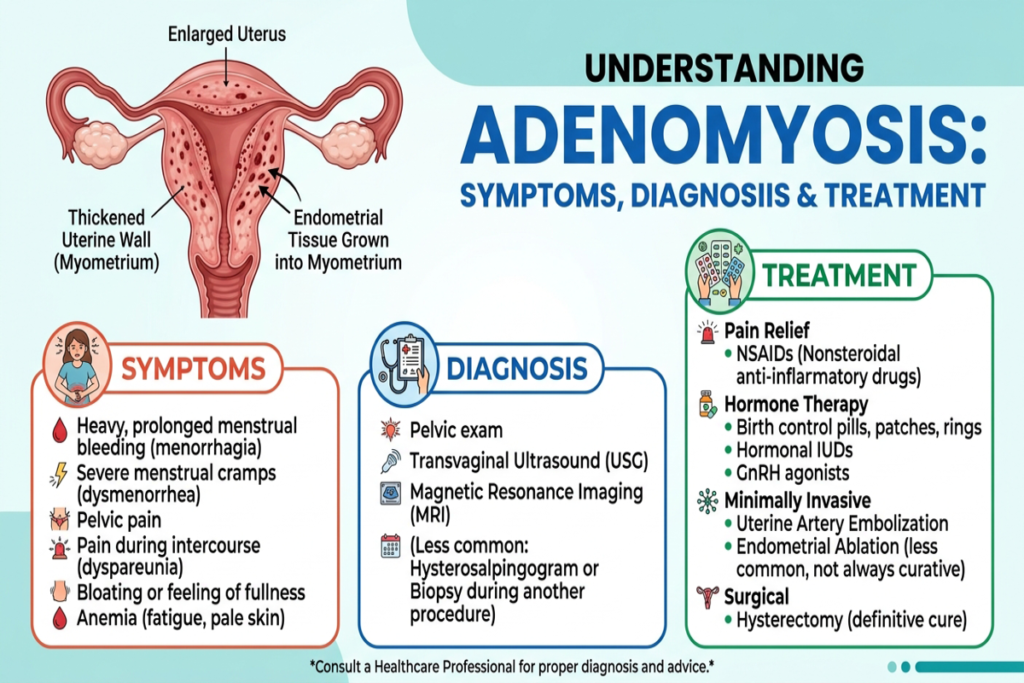
Adenomyosis: Symptoms, Diagnosis & Treatment
Adenomyosis is a gynecological condition that occurs when tissue similar to the lining of the uterus grows into the muscular wall of the uterus. It may cause heavy menstrual bleeding, painful periods, pelvic discomfort, and an enlarged or tender uterus.
Some women with adenomyosis experience significant symptoms, while others have few or none. Understanding the condition can help women recognize possible warning signs and explore appropriate treatment options with a gynecologist.
What Is Adenomyosis?
Adenomyosis occurs when endometrium-like tissue is present within the muscular wall of the uterus, known as the myometrium. This tissue can respond to hormonal changes during the menstrual cycle, contributing to inflammation, uterine enlargement, and pain.
Adenomyosis is different from endometriosis. In endometriosis, similar tissue grows outside the uterus, while adenomyosis affects the muscular wall of the uterus. However, both conditions can occur together.
The condition is often diagnosed in women during their reproductive years, but it can affect individuals at different stages of life.
What Are the Common Symptoms of Adenomyosis?
Symptoms vary from person to person. Common symptoms include:
1. Heavy Menstrual Bleeding
Periods may become heavier or last longer than usual. Heavy bleeding can sometimes lead to iron-deficiency anemia, which may cause fatigue, weakness, or dizziness.
2. Painful Periods
Menstrual cramps may be severe or become more noticeable over time. Pain can interfere with everyday activities and may not respond adequately to usual pain-relief measures.
3. Pelvic Pain and Pressure
Some women experience ongoing pelvic discomfort, a feeling of pressure, or tenderness in the lower abdomen.
4. Pain During Sexual Intercourse
Adenomyosis may cause pain during intercourse in some women, although this symptom can also have other causes.
5. An Enlarged or Tender Uterus
In some cases, the uterus becomes enlarged or tender. This may be identified during a clinical examination or through imaging.
Important: These symptoms are not specific to adenomyosis. Fibroids, endometriosis, hormonal conditions, and other gynecological problems can cause similar symptoms. A medical assessment is needed to identify the likely cause.
What Causes Adenomyosis?
The exact cause of adenomyosis is not fully understood. Researchers have proposed several possible mechanisms involving changes in the uterine tissue, hormonal influences, and interactions between the endometrium and the uterine muscle.
Adenomyosis is associated with estrogen activity, but its development is complex and cannot be explained by one factor alone.
Having adenomyosis is not a personal failing, and symptoms should not be dismissed simply because menstrual pain is common.
How Is Adenomyosis Diagnosed?
Diagnosis usually involves a review of symptoms, medical history, and imaging investigations.
1. Medical History and Examination
A gynecologist may ask about menstrual bleeding, pain, cycle changes, medications, and previous gynecological conditions. A physical or pelvic examination may be recommended when appropriate.
2. Pelvic Ultrasound
Ultrasound is commonly used to assess the uterus and look for features that may suggest adenomyosis. It can also help identify other possible causes of heavy bleeding or pelvic pain, including uterine fibroids.
3. MRI
Magnetic resonance imaging may be recommended when ultrasound findings are unclear or when more detailed assessment is needed.
Adenomyosis can sometimes be difficult to distinguish from other uterine conditions. Your clinician will interpret imaging results alongside your symptoms and examination findings.
What Is the Difference Between Adenomyosis and Endometriosis?
Although the names are similar, the conditions affect different areas.
Adenomyosis: Endometrium-like tissue is found within the muscular wall of the uterus.
Endometriosis: Endometrium-like tissue grows outside the uterus, such as around the ovaries, fallopian tubes, or other pelvic structures.
Both conditions can cause pelvic pain and painful periods, and they may occur together. Appropriate assessment can help determine which condition or combination of conditions may be contributing to symptoms.
Can Adenomyosis Affect Fertility or Pregnancy?
Adenomyosis may be associated with fertility difficulties and certain pregnancy complications in some patients, but the effect varies. Many people with adenomyosis can become pregnant.
The relationship between adenomyosis and fertility is complex. Age, ovarian function, other reproductive conditions, and previous pregnancy history may also influence fertility outcomes.
If you are planning a pregnancy and have adenomyosis or persistent symptoms, discuss your reproductive goals with a gynecologist or fertility specialist. Your clinician can help determine whether additional evaluation or treatment is appropriate.
Treatment decisions should take fertility plans into account, particularly before considering procedures that may affect the uterus.
What Are the Treatment Options for Adenomyosis?
Treatment depends on symptom severity, age, medical history, and whether pregnancy is desired now or in the future.
1. Pain Relief
A healthcare professional may recommend appropriate pain-relief medication to manage menstrual cramps. The choice depends on your medical history and any contraindications.
2. Hormonal Treatments
Hormonal options may help reduce heavy bleeding and menstrual pain. Depending on the individual’s needs, options may include hormonal contraceptives or a levonorgestrel-releasing intrauterine system.
Not every treatment is suitable for everyone, particularly those who are trying to conceive. Discuss the benefits and limitations with your clinician.
3. Treatment for Heavy Bleeding
When heavy menstrual bleeding is a concern, a clinician may recommend treatments to reduce blood loss and may assess for anemia with blood tests. Iron treatment may be recommended if iron deficiency is confirmed.
4. Other Procedures
Selected patients may be offered specialist procedures depending on their symptoms, imaging findings, and reproductive plans. The benefits and risks should be discussed before proceeding.
5. Surgery
For severe symptoms that do not respond to other treatments, surgery may be considered. Hysterectomy, which removes the uterus, is a definitive treatment for uterine adenomyosis, but it permanently ends the ability to carry a pregnancy.
Because treatment can have important reproductive consequences, decisions should be made with a specialist after discussing alternatives and future pregnancy plans.
When Should You See a Gynecologist?
Arrange a consultation if you experience:
Periods that are unusually heavy or last longer than expected.
Severe menstrual cramps that interfere with daily activities.
Persistent pelvic pain or pressure.
Pain during intercourse.
Symptoms of possible anemia, such as unusual fatigue or dizziness.
Concerns about fertility alongside menstrual symptoms.
Seek urgent medical attention if you have very heavy bleeding accompanied by faintness, severe weakness, shortness of breath, or sudden severe pelvic pain.
Early assessment can help identify the cause of symptoms and determine the most appropriate care.
Frequently Asked Questions About Adenomyosis
Is adenomyosis dangerous?
Adenomyosis is generally a non-cancerous condition, but symptoms can significantly affect quality of life. Heavy bleeding may also lead to anemia, so persistent symptoms should be assessed.
Can adenomyosis go away on its own?
Symptoms may change over time and often improve after menopause, but the course varies. Treatment may be needed to manage pain or heavy bleeding.
Can adenomyosis be seen on ultrasound?
Yes. Ultrasound can identify features that suggest adenomyosis, although further imaging or specialist assessment may sometimes be needed.
Does adenomyosis always cause heavy periods?
No. Some women experience heavy bleeding and painful periods, while others have mild symptoms or none at all.
Can women with adenomyosis get pregnant?
Yes, pregnancy is possible. However, adenomyosis may affect fertility or pregnancy outcomes in some individuals, so personalized advice is important when planning a pregnancy.
Is hysterectomy the only treatment?
No. Several non-surgical treatments can help manage symptoms. Hysterectomy is a definitive treatment for adenomyosis but is only appropriate for selected patients who do not wish to carry future pregnancies.
Conclusion
Adenomyosis can contribute to heavy periods, painful menstruation, and pelvic discomfort, but symptoms and treatment needs differ between individuals. An accurate assessment can help distinguish adenomyosis from other gynecological conditions and guide suitable care.
If menstrual symptoms are affecting your quality of life or you have concerns about fertility, consult a qualified gynecologist to discuss your options.
Medical Disclaimer: This article is for educational purposes only and does not replace professional medical advice, diagnosis, or treatment. Consult a qualified healthcare professional for advice about your individual circumstances.