
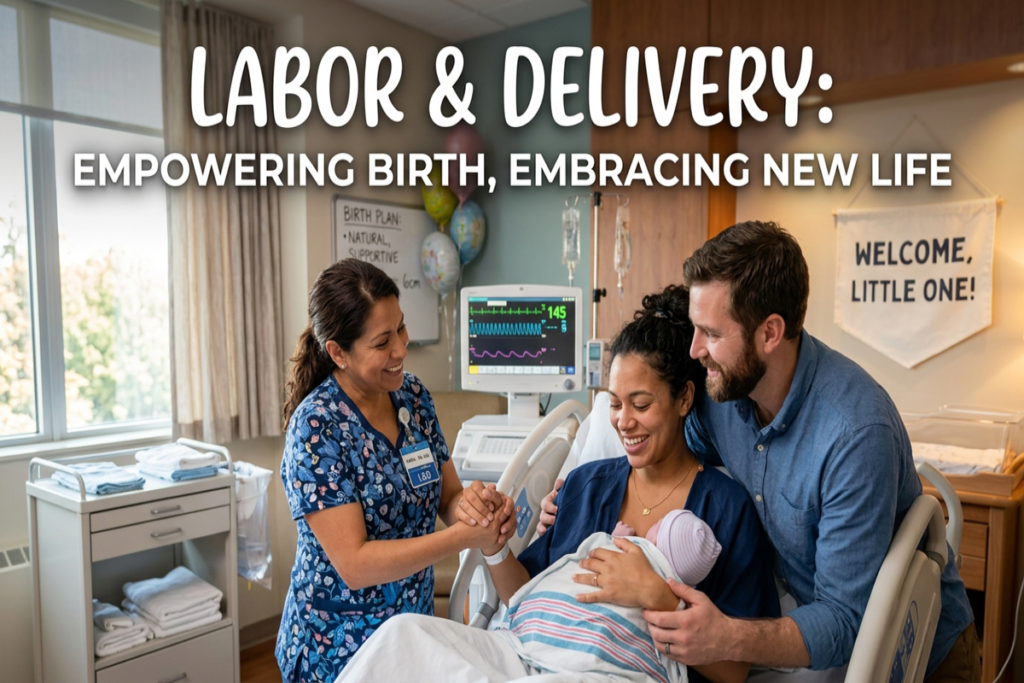
Labor & Delivery: A Complete Guide to Childbirth
Labor and delivery are important stages of pregnancy that mark the beginning of a new chapter for parents. Understanding the signs of labor, the stages of childbirth, available delivery options, and medical care during birth can help expectant mothers feel more informed and prepared.
Whether you are planning a vaginal birth or a cesarean delivery, learning what to expect can help you make informed decisions with your obstetrician.
What Is Labor and Delivery?
Labor is the process through which the uterus contracts to help the cervix open and allow the baby to move through the birth canal. Delivery refers to the birth of the baby and the subsequent delivery of the placenta.
The experience of childbirth varies from one woman to another. Your healthcare provider will monitor your health and your baby’s well-being throughout the process.
What Are the Signs of Labor?
Recognizing the signs of labor can help you know when to contact your healthcare provider. Common signs include:
Regular contractions: Contractions that become more regular, stronger, and closer together.
Lower back pain: Persistent discomfort or pressure in the lower back.
Cervical changes: The cervix begins to soften, thin, and open.
Passing the mucus plug: A thick discharge that may contain small streaks of blood.
Water breaking: The amniotic sac ruptures, causing fluid to leak or gush from the vagina.
Not every woman experiences all these signs. Contact your maternity unit if you think labor has started. Seek urgent medical advice if you experience heavy vaginal bleeding, severe persistent abdominal pain, reduced fetal movement, or fluid leakage before 37 weeks of pregnancy.
The Three Main Stages of Labor
1. The First Stage: Cervical Dilation
The first stage begins when labor starts and continues until the cervix is fully dilated to approximately 10 centimeters.
During this stage, contractions help the cervix open. Early labor may take time, while established labor generally involves stronger and more frequent contractions. Your medical team will monitor progress according to your individual circumstances.
2. The Second Stage: Giving Birth
The second stage begins when the cervix is fully dilated and ends with the birth of the baby.
Depending on the baby’s position and the mother’s condition, the healthcare team may guide the mother through pushing. Some births require additional assistance, such as an assisted vaginal delivery, when medically appropriate.
3. The Third Stage: Delivery of the Placenta
After the baby is born, the placenta is delivered. Healthcare professionals monitor bleeding, uterine contractions, and the mother’s overall condition to help reduce the risk of complications.
After birth, the team also assesses the newborn and supports early skin-to-skin contact and breastfeeding when appropriate.
Types of Delivery
Vaginal Delivery
Vaginal delivery occurs when the baby is born through the birth canal. For many pregnancies, it is a safe option with recovery that is often shorter than recovery after a cesarean birth.
Cesarean Delivery (C-Section)
A cesarean delivery is a surgical procedure in which the baby is delivered through incisions in the abdomen and uterus. It may be planned in advance or performed during labor when medically necessary.
The safest delivery method depends on factors such as the mother’s health, the baby’s position, the progress of labor, and any pregnancy complications.
Pain Relief During Labor
Several methods can help manage labor pain, depending on the mother’s preferences, medical history, and available services.
Options may include:
Breathing and relaxation techniques.
Movement and changes in position.
Massage and other comfort measures.
Medication for pain relief.
Epidural analgesia, when suitable and available.
Discuss pain-relief options with your obstetrician before your due date so you understand the benefits, limitations, and potential risks of each approach.
How to Prepare for Labor and Delivery
Preparation can help you feel more confident as your due date approaches.
Attend regular antenatal appointments.
Discuss your birth preferences with your healthcare provider.
Learn when to go to the hospital or contact your maternity unit.
Prepare your hospital bag and essential documents.
Ask about pain relief, birth support, and emergency procedures.
Arrange transportation and support for the day of delivery.
A birth plan can communicate your preferences, but flexibility is important because medical circumstances may change during labor.
What Happens After Delivery?
After childbirth, the medical team monitors the mother’s bleeding, blood pressure, uterine contraction, and recovery. The newborn receives an initial assessment and any recommended routine care.
New mothers may experience uterine cramps, vaginal bleeding, fatigue, and emotional changes during recovery. Your healthcare provider can explain which symptoms are expected and when to seek medical attention.
Seek urgent medical care for heavy bleeding, difficulty breathing, chest pain, severe headache, seizures, or other sudden and concerning symptoms after birth.
When Should You Contact Your Doctor?
Contact your obstetrician or maternity unit if you experience regular contractions, your water breaks, or you are concerned that labor has started.
Seek urgent assessment for vaginal bleeding, reduced fetal movement, severe abdominal pain, or suspected labor before 37 weeks. Follow the specific instructions provided by your maternity team.
Conclusion
Labor and delivery involve several stages, from the beginning of contractions to the birth of the baby and delivery of the placenta. Understanding the signs of labor, delivery options, pain-relief methods, and postpartum care can help expectant mothers prepare for childbirth.
Regular antenatal care and guidance from an experienced obstetrician are essential for supporting the health of both mother and baby. Every pregnancy is different, so discuss your individual needs and birth preferences with your healthcare provider.
Book a consultation with Dr. Shady Saleem to discuss your pregnancy, delivery options, and personalized maternity