
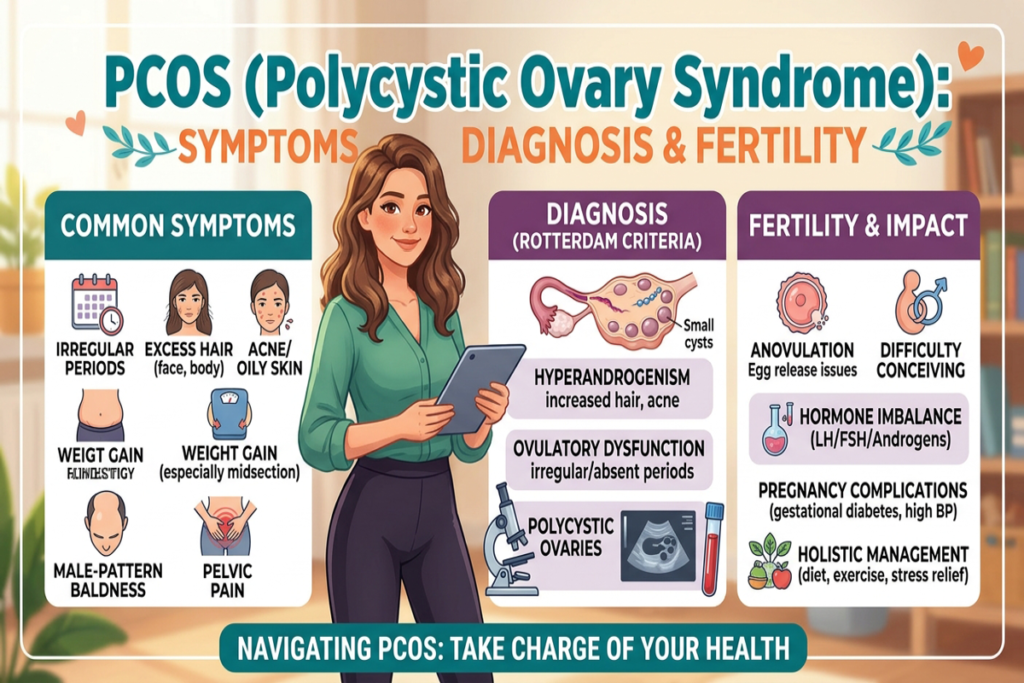
PCOS (Polycystic Ovary Syndrome): Symptoms, Diagnosis & Fertility
What Is Polycystic Ovary Syndrome (PCOS)?
Polycystic ovary syndrome (PCOS) is a common hormonal condition that can affect menstrual cycles, ovulation, and metabolic health. It may also affect a woman’s ability to become pregnant, although many women with PCOS can conceive naturally or with appropriate treatment.
Despite its name, having PCOS does not necessarily mean that a woman has ovarian cysts. The condition is associated with a combination of hormonal and reproductive features, and symptoms can vary considerably from one person to another.
Understanding PCOS can help women recognize possible symptoms, seek an appropriate assessment, and explore treatment options based on their health needs and reproductive goals.
What Are the Common Symptoms of PCOS?
PCOS symptoms differ between individuals. Some women experience several symptoms, while others notice only changes in their menstrual cycle or discover the condition during a fertility assessment.
Common features may include:
Irregular periods: Menstrual cycles may be infrequent, unpredictable, or absent because ovulation does not occur regularly.
Excess facial or body hair: Higher androgen levels can contribute to increased hair growth in some women.
Acne or oily skin: Hormonal changes may contribute to persistent acne.
Difficulty with ovulation: Irregular ovulation can make it harder to predict the fertile window and conceive.
Scalp hair thinning: Some women experience hair thinning associated with androgen activity.
Metabolic concerns: PCOS is associated with an increased risk of insulin resistance and type 2 diabetes.
Not everyone with PCOS experiences all these features. Symptoms alone cannot confirm the diagnosis, so a clinical assessment is important.
What Causes PCOS?
The exact cause of PCOS is not fully understood. Research suggests that several factors may contribute, including genetics, hormonal regulation, and insulin resistance.
Hormonal Imbalance
Some women with PCOS have higher levels or activity of androgens, hormones that are present in all women but usually at lower levels than in men. Increased androgen activity can contribute to acne, excess hair growth, and disrupted ovulation.
Insulin Resistance
Insulin helps regulate blood glucose levels. In some women, the body’s cells respond less effectively to insulin, prompting the body to produce more of it.
Higher insulin levels can contribute to hormonal changes that affect ovulation and androgen activity. However, insulin resistance is not present in every woman with PCOS.
Genetic Factors
PCOS can occur in families, suggesting that inherited factors may contribute to a person’s likelihood of developing the condition. Genetics do not determine every outcome, and symptoms can vary among relatives.
PCOS is not caused by a personal failure or a single lifestyle choice. Assessment and treatment should focus on the individual’s symptoms, health risks, and goals.
How Is PCOS Diagnosed?
There is no single test that confirms every case of PCOS. Healthcare professionals generally consider a combination of symptoms, medical history, examination findings, and laboratory tests.
In adults, diagnosis commonly involves assessing three main features:
Irregular or absent ovulation.
Clinical or biochemical evidence of increased androgen activity.
Polycystic ovarian appearance on ultrasound, when relevant.
Other possible causes of similar symptoms must be considered and excluded. In adults, two of these three features may support a diagnosis after other causes have been assessed.
Blood Tests
Blood tests may be used to evaluate androgen levels and check for other conditions that can cause irregular periods or similar symptoms. Additional tests may assess glucose regulation, cholesterol, or other aspects of metabolic health.
Pelvic Ultrasound
An ultrasound may assess the ovaries and reproductive organs. However, ultrasound is not always required to diagnose PCOS in adults if the other diagnostic criteria are already met.
The diagnostic approach differs for adolescents, in whom menstrual irregularity and acne can be common during normal puberty. Ultrasound alone should not be used to diagnose PCOS in adolescents.
Can PCOS Affect Fertility?
PCOS can affect fertility because it may interfere with regular ovulation. When ovulation is infrequent or unpredictable, the opportunity for conception may be reduced.
However, PCOS does not mean that pregnancy is impossible. Many women with the condition conceive naturally, while others benefit from treatment to support ovulation.
A fertility assessment can help determine whether PCOS is the main factor affecting conception or whether other issues also need attention, including sperm health, fallopian tube function, or other reproductive conditions.
PCOS Treatment Options
There is no single treatment that suits everyone with PCOS. Management depends on the symptoms, metabolic health, whether pregnancy is desired, and other individual factors.
1. Managing Irregular Periods
For women who are not trying to conceive, healthcare professionals may recommend hormonal treatments to regulate bleeding patterns and protect the lining of the uterus when periods are very infrequent.
The most suitable option depends on medical history, contraindications, and personal preferences.
2. Managing Acne and Excess Hair Growth
Treatment may include selected hormonal medicines or other therapies directed at the specific symptom. Improvement can take time, and a healthcare professional can explain expected benefits, limitations, and potential side effects.
3. Supporting Metabolic Health
PCOS may be associated with insulin resistance, elevated blood glucose, and changes in cholesterol. Depending on individual risk, a clinician may recommend glucose testing, lipid assessment, balanced nutrition, and regular physical activity.
Medication may be considered when clinically appropriate.
4. Ovulation Induction for Pregnancy
For women with PCOS who are trying to conceive and have difficulty ovulating, medication may be used to help stimulate ovulation.
Letrozole is commonly recommended as a first-line medication for ovulation induction in many women with PCOS-related anovulatory infertility, when there are no other infertility factors and its use is clinically appropriate.
Treatment requires medical supervision, and the choice depends on the patient’s circumstances and local clinical guidance.
5. IVF and Other Fertility Treatments
If simpler treatments are unsuccessful or other fertility factors are present, additional options may be considered. These can include further fertility treatment or in vitro fertilization (IVF).
IVF is not necessary for every woman with PCOS. A specialist can explain the available approaches, their potential benefits and risks, and which option best matches the patient’s needs.
Can Women With PCOS Have a Healthy Pregnancy?
Yes. Many women with PCOS have healthy pregnancies. However, PCOS is associated with an increased risk of some pregnancy complications, including gestational diabetes and hypertensive disorders such as preeclampsia.
A preconception consultation can help identify relevant health concerns and determine whether additional monitoring is appropriate.
Once pregnant, women with PCOS should attend routine antenatal appointments and follow their clinician’s recommendations for screening and monitoring. The care plan should be individualized rather than assuming every pregnancy will be high-risk.
When Should You See a Gynecologist?
Consider arranging an appointment if you experience:
Persistently irregular or absent periods.
Symptoms suggesting increased androgen activity, such as new or persistent excess facial hair.
Difficulty becoming pregnant.
Concerns about blood glucose or other metabolic health risks.
Significant changes in menstrual patterns or other symptoms that concern you.
Very infrequent periods may require assessment because prolonged gaps between periods can sometimes increase the risk of excessive thickening of the uterine lining.
Seek prompt medical advice for sudden, severe pelvic pain or other acute symptoms rather than assuming they are caused by PCOS.
Frequently Asked Questions
Does PCOS always cause ovarian cysts?
No. Despite its name, PCOS does not require ovarian cysts to be present. The diagnosis is based on a combination of clinical features and appropriate assessment.
Can PCOS be cured?
There is currently no single cure for PCOS, but symptoms and associated health risks can often be managed effectively. Treatment can change over time according to a woman’s symptoms and goals.
Can I get pregnant naturally if I have PCOS?
Yes. Many women with PCOS conceive naturally. Others may need treatment to support ovulation or address additional fertility factors.
Does every woman with PCOS need medication?
No. Treatment depends on symptoms, health risks, and reproductive goals. Some women need monitoring and supportive lifestyle measures, while others benefit from medication.
Is PCOS the same as infertility?
No. PCOS can contribute to infertility when it disrupts ovulation, but it does not mean a woman cannot become pregnant. Fertility evaluation helps identify the most appropriate next steps.
Conclusion
Polycystic ovary syndrome is a complex hormonal condition that can affect menstrual regularity, ovulation, skin symptoms, and metabolic health. Early assessment can help clarify the diagnosis and support an individualized treatment plan.
Whether your main concern is irregular periods, hormonal symptoms, or difficulty conceiving, a gynecologist or fertility specialist can help you understand your options and plan appropriate care.
Medical disclaimer: This article is intended for educational purposes only and does not replace professional medical advice, diagnosis, or treatment.