
Gestational Diabetes in Pregnancy: Symptoms, Diagnosis & Management
What Is Gestational Diabetes?
Gestational diabetes mellitus (GDM) is a type of diabetes first diagnosed during pregnancy. It occurs when blood glucose levels become higher than recommended because the body cannot produce or use enough insulin to meet the increased demands of pregnancy.
Hormonal changes during pregnancy can make insulin less effective. When the body cannot compensate adequately, glucose builds up in the bloodstream.
Gestational diabetes can affect women who have never previously been diagnosed with diabetes. With appropriate monitoring and treatment, many women with this condition have healthy pregnancies and babies.
What Are the Symptoms of Gestational Diabetes?
Gestational diabetes often causes no noticeable symptoms. Many women discover they have it only after routine screening during pregnancy.
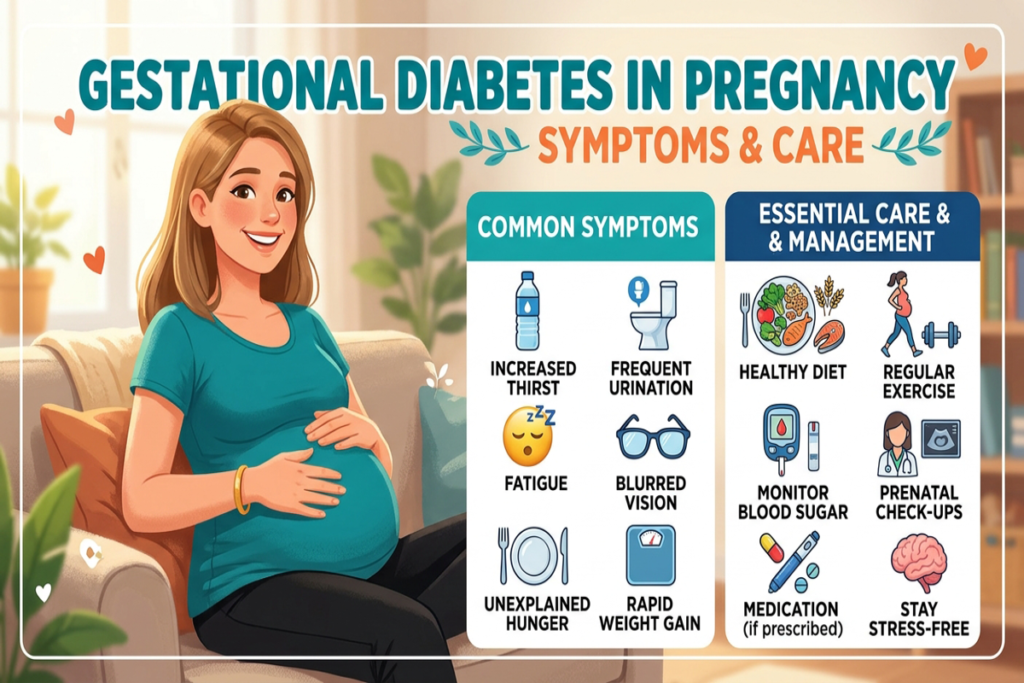
When symptoms occur, they may include increased thirst, more frequent urination, or unusual tiredness. However, these symptoms can also occur in normal pregnancy and are not reliable ways to diagnose gestational diabetes.
The absence of symptoms does not rule out gestational diabetes. Following your recommended antenatal screening schedule is important, even if you feel well.
What Causes Gestational Diabetes?
During pregnancy, hormones produced by the placenta affect how the body responds to insulin. Insulin helps move glucose from the bloodstream into cells, where it can be used for energy.
As pregnancy progresses, insulin resistance normally increases. If the pancreas cannot produce enough additional insulin to maintain normal blood glucose levels, gestational diabetes may develop.
This condition is not simply caused by eating sugar. It reflects a combination of pregnancy-related hormonal changes and individual factors affecting glucose regulation.
Who Is at Higher Risk of Gestational Diabetes?
Gestational diabetes can develop in any pregnancy, but certain factors may increase the likelihood of developing it.
Risk factors include:
A history of gestational diabetes in a previous pregnancy.
Having previously given birth to a baby with a high birth weight.
Overweight or obesity before pregnancy.
A family history of type 2 diabetes.
Polycystic ovary syndrome (PCOS).
Prediabetes or elevated blood glucose before pregnancy.
Previous identification of elevated blood glucose levels.
Women without these risk factors can also develop gestational diabetes. Screening recommendations vary by country and clinical circumstances, so your healthcare professional can advise on the appropriate approach.
When Is Gestational Diabetes Diagnosed?
Gestational diabetes is commonly screened for between 24 and 28 weeks of pregnancy. Screening may be performed earlier in some women, particularly when risk factors or previous test results suggest that earlier assessment is appropriate.
Early testing may also help identify previously unrecognized diabetes that existed before pregnancy.
Your obstetrician will recommend the timing and type of testing according to your medical history and local clinical guidelines.
What Is the Gestational Diabetes Test?
Gestational diabetes is diagnosed using blood glucose testing. The exact approach varies between healthcare systems.
Oral Glucose Tolerance Test (OGTT)
The oral glucose tolerance test measures how the body processes glucose.
Depending on the protocol used, the test may involve:
Taking a blood sample before drinking a glucose solution.
Drinking a measured glucose beverage.
Collecting additional blood samples at specified intervals.
Comparing the results with the diagnostic thresholds used by the healthcare provider.
Some healthcare systems use a one-step test, while others use an initial screening test followed by a diagnostic test if the first result is elevated.
Your clinic will explain whether fasting is required and how to prepare. Follow the instructions provided rather than changing your diet or medication independently before testing.
How Can Gestational Diabetes Affect the Baby?
When blood glucose remains above the recommended range, glucose crosses the placenta and can cause the baby’s pancreas to produce more insulin. This may affect fetal growth and increase the risk of certain complications.
Possible risks include:
Large birth weight: The baby may grow larger than expected, which can complicate delivery.
Birth complications: A larger baby may increase the likelihood of delivery difficulties.
Low blood glucose after birth: Some newborns may develop low blood sugar and need monitoring after delivery.
Preterm birth: The risk may be increased in some pregnancies, depending on the clinical circumstances.
Higher future metabolic risk: The child may have an increased risk of developing obesity or glucose regulation problems later in life.
These outcomes are not inevitable. Appropriate glucose management and antenatal monitoring can help reduce risks.
How Can Gestational Diabetes Affect the Mother?
Gestational diabetes may increase the likelihood of pregnancy complications, including high blood pressure and preeclampsia. It can also increase the chance of requiring a cesarean birth in some circumstances.
Women who have had gestational diabetes also have a higher long-term risk of developing type 2 diabetes.
These risks are one reason why treatment during pregnancy and follow-up after delivery are both important.
How Is Gestational Diabetes Managed?
The goal of treatment is to keep blood glucose within the individualized targets recommended by the healthcare team while supporting the healthy growth and development of the baby.
1. Blood Glucose Monitoring
Your healthcare professional may ask you to check blood glucose at specific times, such as before or after meals. The frequency and target levels depend on your care plan.
Recording results helps the healthcare team assess whether treatment is working and whether adjustments are needed.
2. Balanced Nutrition
A registered dietitian or healthcare professional can help develop a meal plan that supports pregnancy nutrition and blood glucose control.
General principles may include:
Eating regular, balanced meals and snacks according to your care plan.
Choosing high-fiber carbohydrate sources where appropriate.
Including vegetables, protein sources, and healthy fats in balanced meals.
Distributing carbohydrate intake throughout the day as advised.
Limiting sugary drinks and large amounts of added sugar.
Pregnancy is not the time to follow a restrictive weight-loss diet. Nutritional needs vary, and meal planning should support both maternal health and fetal development.
3. Physical Activity
When medically appropriate, regular moderate physical activity can support glucose management during pregnancy.
Your obstetrician can advise which activities are suitable for you, especially if you have pregnancy complications or have been given activity restrictions.
4. Medication When Needed
Some women can manage gestational diabetes with nutrition, physical activity, and glucose monitoring. Others need medication because blood glucose remains above their recommended targets.
Insulin is commonly used when medication is needed during pregnancy. Other treatment options depend on local guidelines and individual clinical circumstances.
Do not start, stop, or adjust medication without guidance from your healthcare professional.
How Is the Baby Monitored During Pregnancy?
The monitoring plan depends on glucose control, medication requirements, gestational age, and any additional pregnancy complications.
Your healthcare team may recommend:
Routine antenatal appointments.
Ultrasound assessments of fetal growth when indicated.
Amniotic fluid assessment when clinically appropriate.
Additional fetal well-being monitoring in selected pregnancies.
Planning the timing and mode of delivery according to individual risk.
Not every woman with gestational diabetes requires the same number of scans or the same monitoring schedule. Your care team will tailor the plan to your circumstances.
What Happens After Delivery?
Blood glucose levels often improve after the placenta is delivered, and gestational diabetes frequently resolves. However, follow-up testing is important because some women continue to have elevated glucose levels or have previously unrecognized diabetes.
A postpartum glucose test is generally recommended around 4 to 12 weeks after delivery, using the test advised by your healthcare professional.
Long-term screening for type 2 diabetes is also important, often at least every three years or more frequently depending on individual risk and clinical guidance.
If you plan another pregnancy, tell your healthcare professional about your history of gestational diabetes so appropriate early assessment can be arranged.
Frequently Asked Questions
Can gestational diabetes develop without symptoms?
Yes. Most women do not experience clear symptoms, which is why recommended screening is important.
Does gestational diabetes mean I already had diabetes before pregnancy?
Not necessarily. Gestational diabetes is diagnosed during pregnancy, but testing may sometimes reveal previously unrecognized diabetes. Your clinician can help distinguish between these situations.
Will I need insulin if I have gestational diabetes?
Not everyone needs insulin. Some women achieve their glucose targets with a personalized nutrition plan, suitable physical activity, and monitoring. Medication is recommended when needed to manage glucose safely.
Can I have a vaginal birth with gestational diabetes?
Yes, many women with gestational diabetes can have a vaginal birth. The recommended delivery plan depends on factors such as glucose control, estimated fetal size, gestational age, and other maternal or fetal considerations.
Does gestational diabetes go away after birth?
It often resolves after delivery, but postpartum testing is needed to confirm that blood glucose has returned to the expected range. Continued screening is important because future type 2 diabetes risk remains higher.
Conclusion
Gestational diabetes is a common pregnancy complication that can often be managed effectively with appropriate screening, individualized nutrition, blood glucose monitoring, and medication when necessary.
Early diagnosis and regular antenatal care help the healthcare team monitor both maternal health and fetal development and plan for a safe delivery.
If you have risk factors for gestational diabetes or have been advised to undergo glucose testing, discuss the recommended screening and care plan with your obstetrician.
Medical disclaimer: This article is for educational purposes only and does not replace professional medical advice, diagnosis, or treatment.