
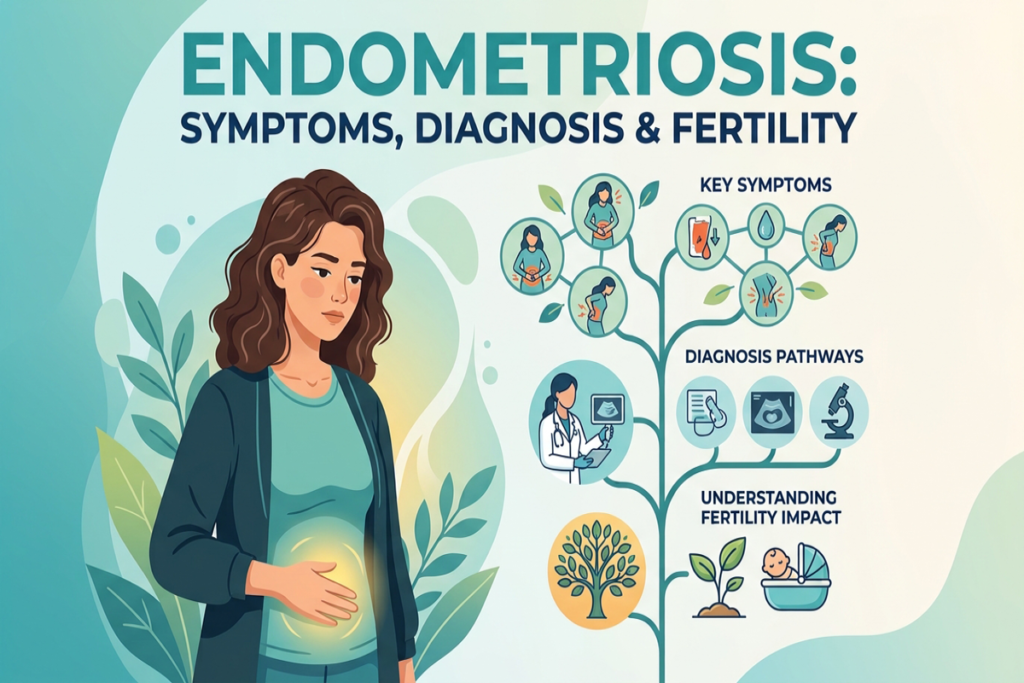
Endometriosis: Symptoms, Diagnosis & Its Impact on Fertility
Endometriosis is a common gynecological condition that can cause pelvic pain, painful periods, and difficulties with conception. It occurs when tissue similar to the lining of the uterus grows outside the uterus, potentially affecting nearby organs and reproductive health.
Although symptoms can sometimes interfere with daily life, their severity varies considerably. Some women experience significant pain, while others have few or no noticeable symptoms.
Understanding endometriosis, how it is diagnosed, and the available treatment options can help women make informed decisions about their health and fertility.
What Is Endometriosis?
Endometriosis is a condition in which tissue similar to the endometrium—the lining of the uterus—grows in areas outside the uterus. These areas may include the ovaries, fallopian tubes, and the tissues lining the pelvis.
The tissue can respond to hormonal changes during the menstrual cycle, leading to inflammation, pain, and sometimes scar tissue or adhesions.
In some cases, endometriosis affects the ovaries and can lead to cysts known as endometriomas.
The condition varies from person to person. The amount of endometriosis found does not always correspond to the severity of symptoms.
What Are the Common Symptoms of Endometriosis?
Endometriosis symptoms can differ significantly. Common signs include:
1. Painful Periods
Menstrual pain that interferes with normal daily activities or becomes progressively worse may be associated with endometriosis. Severe period pain should not automatically be considered normal.
2. Chronic Pelvic Pain
Some women experience pelvic pain outside their menstrual periods. The discomfort may be persistent or occur at different points throughout the cycle.
3. Pain During or After Sexual Intercourse
Pain during or after intercourse can occur with endometriosis, particularly when areas of the pelvis are affected.
4. Painful Bowel Movements or Urination
Some women experience pain when passing stool or urinating, especially around menstruation. Persistent or recurring symptoms should be discussed with a healthcare professional.
5. Heavy or Irregular Menstrual Bleeding
Some women experience heavy periods or bleeding between periods, although these symptoms can also have other causes.
6. Difficulty Getting Pregnant
Endometriosis may affect fertility in some women. However, many women with endometriosis conceive naturally, and a diagnosis does not automatically mean infertility.
Important: Symptoms alone cannot confirm endometriosis. Similar symptoms may occur with other gynecological or pelvic conditions, so medical assessment is important.
What Causes Endometriosis?
The exact cause of endometriosis is not fully understood. Researchers have identified several possible contributing mechanisms, including:
Retrograde menstruation, in which menstrual blood flows backward through the fallopian tubes into the pelvis.
Genetic and family-related factors.
Differences in immune and inflammatory responses.
Hormonal influences, particularly estrogen.
Other biological processes that may contribute to the development of endometriosis.
No single explanation accounts for every case, and the condition can occur in women with different medical and reproductive histories.
How Is Endometriosis Diagnosed?
Diagnosing endometriosis involves assessing symptoms, medical history, and appropriate investigations.
1. Medical History and Pelvic Examination
A gynecologist may ask about menstrual pain, pelvic discomfort, bowel or bladder symptoms, previous treatments, and fertility plans. A pelvic examination may be recommended depending on the circumstances.
2. Ultrasound
A pelvic ultrasound, sometimes performed transvaginally when appropriate and acceptable to the patient, can help identify ovarian endometriomas and certain forms of deep endometriosis.
However, a normal ultrasound does not exclude endometriosis, particularly superficial disease.
3. MRI
Magnetic resonance imaging may be recommended when detailed assessment of deep endometriosis or involvement of nearby organs is needed.
4. Laparoscopy
Laparoscopy is a surgical procedure that allows a clinician to examine the pelvis directly. It may be considered in selected cases when symptoms, imaging findings, or treatment decisions make it appropriate.
Surgery is not always required before a clinical diagnosis or treatment can be considered. The most suitable diagnostic approach depends on the individual’s symptoms and circumstances.
Can Endometriosis Affect Fertility?
Endometriosis may affect fertility, but its impact varies widely. Some women with the condition conceive without medical assistance, while others may need fertility evaluation or treatment.
Possible ways endometriosis may affect fertility include:
Scar tissue and adhesions: These may interfere with the normal relationship between the ovaries and fallopian tubes.
Ovarian endometriomas: These cysts and their treatment may affect ovarian function or ovarian reserve in some cases.
Inflammation: Changes in the pelvic environment may contribute to difficulties with conception.
Other fertility factors: Age, ovulation, sperm health, and tubal function may also influence the chances of pregnancy.
Having endometriosis does not determine an individual’s fertility outcome. A personalized assessment can help clarify the factors involved and identify appropriate next steps.
Endometriosis and Pregnancy Planning
Women with endometriosis who wish to become pregnant should discuss their plans with a gynecologist or fertility specialist.
The evaluation may consider:
Age and duration of trying to conceive.
Menstrual cycle and ovulation patterns.
Ovarian reserve, when testing is appropriate.
Fallopian tube function.
Sperm analysis when relevant.
Previous endometriosis surgery and other medical history.
The best approach depends on these findings. Some women may continue trying to conceive naturally, while others may benefit from fertility treatment.
Women aged under 35 are generally advised to seek an infertility evaluation after 12 months of trying to conceive, and women aged 35 or older after 6 months. Earlier assessment may be appropriate when endometriosis or another known fertility concern is present.
What Are the Treatment Options for Endometriosis?
Treatment aims to manage symptoms, improve quality of life, and address fertility goals where relevant. There is no single treatment that is right for everyone.
1. Pain Management
A clinician may recommend suitable pain-relief medication based on symptoms, medical history, and individual safety considerations.
2. Hormonal Treatment
Hormonal treatments may help reduce pain and control symptoms. Options can include certain hormonal contraceptives or other hormone-regulating medications.
These treatments are generally used to manage symptoms rather than to improve natural conception while a person is taking them. The appropriate choice depends on whether pregnancy is currently desired.
3. Surgery
Surgery may be considered for selected patients to remove or treat endometriosis lesions, address endometriomas, or manage significant symptoms.
The possible benefits and risks should be discussed carefully. Ovarian surgery can affect ovarian reserve in some circumstances, so fertility plans are important when deciding whether and how to operate.
4. Fertility Treatment
When endometriosis is associated with difficulty conceiving, treatment may include fertility support or assisted reproductive technologies such as in vitro fertilization (IVF).
IVF may be suitable for some patients, depending on age, ovarian reserve, tubal function, sperm factors, previous treatments, and other clinical findings. It is not necessary for every woman with endometriosis.
Treatment decisions should be individualized, with consideration of both symptom relief and reproductive goals.
When Should You See a Gynecologist?
Consider arranging a medical consultation if you experience:
Period pain that disrupts school, work, sleep, or everyday activities.
Persistent or recurring pelvic pain.
Pain during intercourse.
Menstrual-related bowel or bladder symptoms.
Difficulty conceiving or concerns about fertility.
Symptoms that continue despite initial treatment.
Seek urgent medical attention for sudden, severe pelvic pain, particularly if accompanied by fainting, fever, heavy bleeding, or possible pregnancy.
Early assessment can help identify the cause of symptoms and guide appropriate care.
Frequently Asked Questions About Endometriosis
Is endometriosis a common condition?
Yes. Endometriosis is a recognized gynecological condition that affects many women of reproductive age. Symptoms and severity vary considerably.
Can you have endometriosis without symptoms?
Yes. Some women have endometriosis without obvious symptoms, and it may be identified during investigations for other reasons or during fertility assessment.
Does endometriosis always cause infertility?
No. Many women with endometriosis conceive naturally. Others may experience difficulties and benefit from individualized fertility evaluation and treatment.
Can endometriosis be seen on ultrasound?
Ultrasound can identify some forms of endometriosis, including many ovarian endometriomas and certain cases of deep disease. However, a normal scan does not rule out all forms of the condition.
Does endometriosis have a cure?
There is currently no guaranteed permanent cure. Treatments can help manage symptoms and, in selected cases, surgery can treat visible disease. Symptoms may recur, so ongoing care may be helpful.
Is IVF necessary for women with endometriosis?
No. IVF is one possible fertility treatment, but it is not necessary for everyone. The recommended approach depends on the person’s fertility assessment, age, symptoms, and reproductive goals.
Conclusion
Endometriosis can affect menstrual health, pelvic comfort, and fertility, but its impact differs from one woman to another. Recognizing persistent symptoms and obtaining an appropriate medical assessment can help guide diagnosis and treatment.
Whether the main concern is pelvic pain, menstrual symptoms, or pregnancy planning, care should be tailored to each woman’s needs and goals.
A consultation with a gynecologist or fertility specialist can help determine the most appropriate next steps.
Medical Disclaimer: This article is for educational purposes only and does not replace professional medical advice, diagnosis, or treatment. Consult a qualified healthcare professional for advice about your symptoms and individual circumstances.