
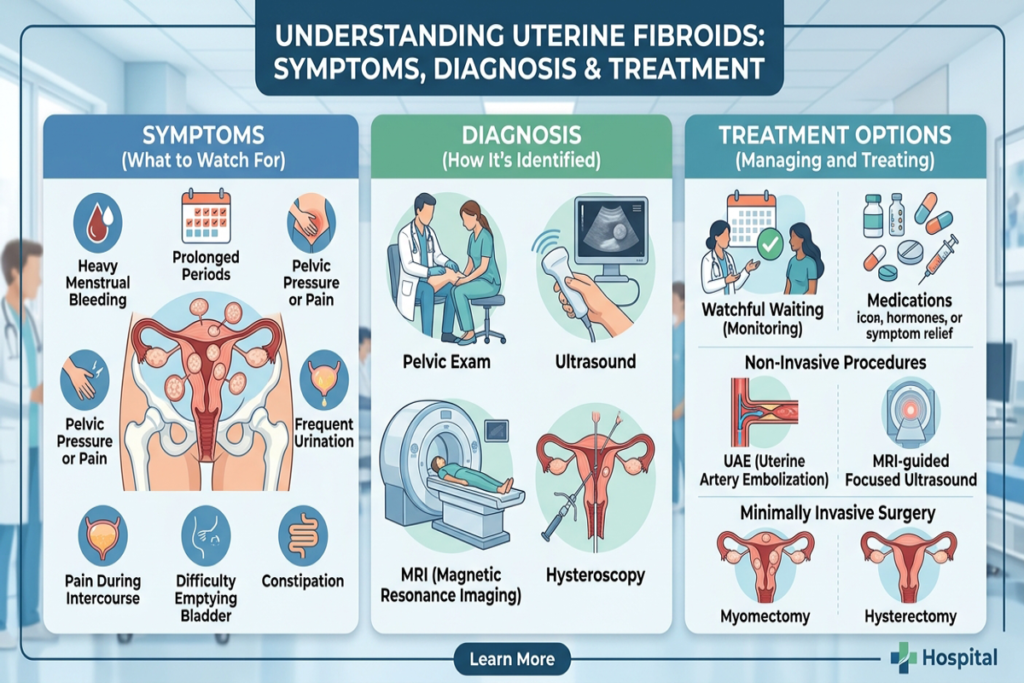
Uterine Fibroids: Symptoms, Diagnosis & Treatment
Uterine fibroids are common, non-cancerous growths that develop in or around the uterus. They can vary in size, number, and location. While some women experience no symptoms, others may have heavy menstrual bleeding, pelvic pressure, painful periods, or difficulties related to fertility.
Understanding uterine fibroids, how they are diagnosed, and the available treatment options can help women make informed decisions about their reproductive and gynecological health.
What Are Uterine Fibroids?
Uterine fibroids, also known as leiomyomas or myomas, are growths made up of muscle and other tissue that develop in the wall of the uterus.
Fibroids are classified according to where they grow:
Intramural fibroids: Develop within the muscular wall of the uterus.
Submucosal fibroids: Grow toward the uterine cavity and may affect menstrual bleeding or fertility.
Subserosal fibroids: Grow toward the outer surface of the uterus and may cause pressure symptoms when large.
Some women have a single fibroid, while others develop several. Their size and location often influence whether they cause symptoms or require treatment.
What Are the Common Symptoms of Uterine Fibroids?
Symptoms depend on the size, number, and location of the fibroids. Common symptoms include:
1. Heavy or Prolonged Menstrual Bleeding
Fibroids, particularly those affecting the uterine cavity, can cause heavy periods or bleeding that lasts longer than usual. Significant blood loss may lead to iron-deficiency anemia.
2. Pelvic Pressure or Discomfort
Larger fibroids may create a feeling of fullness, pressure, or discomfort in the lower abdomen.
3. Frequent Urination
A fibroid pressing against the bladder may increase urinary frequency or create a persistent feeling of needing to urinate.
4. Constipation or Bowel Pressure
Depending on their location and size, fibroids may press against the bowel and contribute to constipation or pelvic pressure.
5. Painful Periods
Some women experience menstrual cramps or pelvic pain. However, severe or persistent pain can have other causes and should be assessed.
6. Fertility or Pregnancy Concerns
Certain fibroids, particularly those that distort the uterine cavity, may affect fertility or pregnancy outcomes. Many women with fibroids can still conceive and have healthy pregnancies.
Important: Some women with uterine fibroids have no symptoms, and fibroids may be discovered during a routine examination or ultrasound.
What Causes Uterine Fibroids?
The exact cause of uterine fibroids is not fully understood. Their development is associated with genetic factors, hormonal influences, and other biological processes.
Factors associated with a higher likelihood of developing fibroids may include:
A family history of uterine fibroids.
Reproductive age.
Hormonal influences, including estrogen and progesterone.
Certain individual and population-level risk factors.
Having one or more risk factors does not mean that a woman will develop fibroids. Their growth patterns also vary between individuals.
How Are Uterine Fibroids Diagnosed?
Diagnosis usually involves a medical history, physical examination when appropriate, and imaging.
1. Gynecological Examination
A clinician may assess symptoms and perform a pelvic examination to check for an enlarged or irregularly shaped uterus.
2. Pelvic Ultrasound
Ultrasound is commonly used to identify fibroids, assess their size and location, and examine the uterus and ovaries.
A transvaginal ultrasound may provide detailed images when appropriate and acceptable to the patient. Other imaging approaches may be used depending on individual circumstances.
3. Blood Tests
If heavy menstrual bleeding is present, blood tests may be recommended to check for anemia or iron deficiency.
4. MRI or Further Investigations
MRI may be helpful when more detailed mapping of fibroids is needed, especially before certain procedures. In selected cases, additional investigations such as hysteroscopy may be recommended to examine the uterine cavity.
The appropriate tests depend on symptoms, imaging findings, and treatment plans.
Can Uterine Fibroids Affect Fertility?
Many women with uterine fibroids conceive naturally. However, some fibroids may affect fertility depending on their location, size, and whether they distort the uterine cavity.
Potential effects include:
Changes to the uterine cavity: Fibroids that extend into or distort the cavity may interfere with implantation.
Location near the fallopian tubes: Certain fibroids may affect the anatomy around the openings of the tubes.
Pregnancy-related considerations: Some fibroids may be associated with pregnancy complications, depending on their characteristics and location.
The relationship between fibroids and fertility is complex. A fibroid does not automatically mean infertility, and removing every fibroid is not always necessary or beneficial.
Women experiencing difficulty conceiving should discuss their ultrasound findings and pregnancy plans with a gynecologist or fertility specialist.
Uterine Fibroids During Pregnancy
Many women with fibroids have uncomplicated pregnancies. However, some may experience additional monitoring or complications depending on the fibroids’ size and location.
Possible concerns include:
Pelvic pain related to changes in a fibroid.
A possible increased risk of certain pregnancy complications.
The position of the baby or the location of the placenta in some cases.
Delivery planning when fibroids affect the uterus or birth canal.
The presence of fibroids does not automatically mean that a pregnancy is high-risk or that a cesarean delivery will be necessary. Care should be individualized according to the clinical findings.
If you are pregnant and have fibroids, your obstetrician can advise whether additional ultrasound monitoring or other care is appropriate.
What Are the Treatment Options for Uterine Fibroids?
Treatment depends on symptoms, fibroid characteristics, age, general health, and whether future pregnancy is desired.
1. Monitoring
Fibroids that cause no symptoms may only need periodic clinical review or imaging, depending on the individual situation.
2. Medication
Medication may help control heavy bleeding or pain. Some hormonal treatments can reduce symptoms, while certain specialist-prescribed medications may temporarily reduce fibroid size.
Medication choice depends on medical history and reproductive goals. Not all treatments are appropriate when trying to conceive or during pregnancy.
3. Minimally Invasive Procedures
Selected patients may be suitable for procedures such as uterine artery embolization or other specialist interventions. Their suitability depends on fibroid characteristics and future pregnancy plans, as some procedures may affect fertility or pregnancy outcomes.
4. Myomectomy
Myomectomy is surgery to remove fibroids while preserving the uterus. It may be considered for women with significant symptoms or selected fertility concerns.
The benefits and risks depend on the number, size, and location of the fibroids. Surgery can also lead to scar tissue, and fibroids may recur.
5. Hysterectomy
Hysterectomy, the surgical removal of the uterus, is a definitive treatment for uterine fibroids. It permanently ends the ability to carry a pregnancy, so it is generally considered only when appropriate after discussion of alternatives and the patient’s reproductive goals.
There is no single treatment that is best for every woman. A gynecologist can explain the available options and help determine an appropriate plan.
When Should You See a Gynecologist?
Arrange a consultation if you experience:
Heavy or prolonged menstrual bleeding.
Persistent pelvic pain or pressure.
Frequent urination or bowel symptoms associated with pelvic pressure.
Symptoms of possible anemia, such as unusual fatigue or dizziness.
Difficulty conceiving or concerns about fibroids and pregnancy.
Seek urgent medical care for very heavy bleeding accompanied by faintness, severe weakness, shortness of breath, or sudden severe pelvic pain.
Frequently Asked Questions About Uterine Fibroids
Are uterine fibroids cancerous?
Most uterine fibroids are benign, meaning they are not cancerous. A new or unusual uterine mass should nevertheless be assessed by a qualified clinician.
Can fibroids disappear without treatment?
Some fibroids may remain stable or change in size over time. Many shrink after menopause, but the course varies. Treatment decisions depend on symptoms and individual circumstances.
Do all fibroids need surgery?
No. Fibroids without troublesome symptoms may not require treatment. Others can be managed with medication or selected procedures, while surgery is appropriate for some patients.
Can I get pregnant if I have uterine fibroids?
Yes. Many women with fibroids become pregnant. The potential impact depends largely on the fibroids’ location and characteristics, as well as other fertility factors.
Can fibroids cause heavy periods?
Yes. Fibroids, especially those affecting the uterine cavity, can contribute to heavy or prolonged menstrual bleeding. Other causes of abnormal bleeding may also need to be investigated.
Is a cesarean delivery always necessary with fibroids?
No. The need for a cesarean delivery depends on the pregnancy, the position of the baby, and whether fibroids obstruct the birth canal or create other clinical concerns.
Conclusion
Uterine fibroids are common and often do not require treatment. When symptoms occur, they may affect menstrual health, comfort, fertility, or pregnancy planning.
An appropriate gynecological assessment can help identify the size and location of fibroids and determine whether monitoring, medication, or a procedure may be helpful.
If you have heavy periods, pelvic pressure, or concerns about fertility, consult a qualified gynecologist to discuss your symptoms and treatment options.
Medical Disclaimer: This article is for educational purposes only and does not replace professional medical advice, diagnosis, or treatment. Consult a qualified healthcare professional about your individual circumstances.